
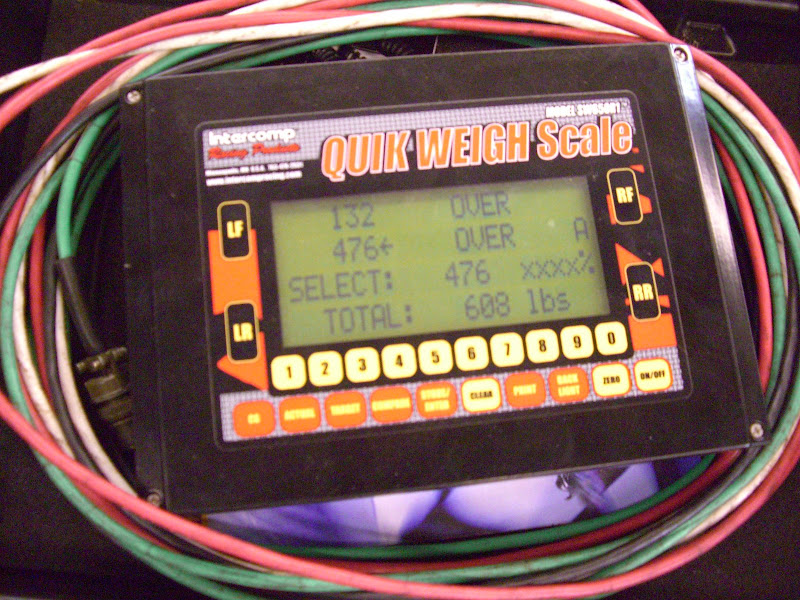
That is not especially light, but the number needs context. “Engine weight” can describe anything from a bare block to a complete running assembly. Two people can quote dramatically different numbers for the same engine and both can be technically correct if they weighed different combinations of parts.
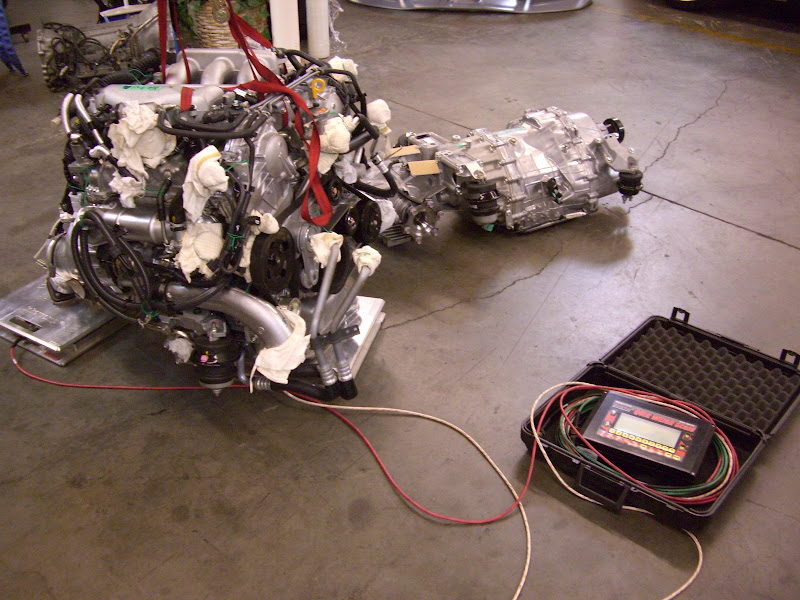
This measurement is useful because it came from an actual assembled VR38DETT rather than a catalog estimate. It is not a bare block, short block or stripped long block figure.
What was included in the 608 pound measurement?
The photographed assembly included the major engine hardware plus:
- Both factory turbochargers
- Exhaust manifolds and associated turbo mounting hardware
- The close coupled catalytic converter and turbo outlet assemblies
- Intake and engine mounted accessory hardware visible in the photographs
The exact status of every hose, fluid, bracket and accessory was not separately documented when the engine was placed on the scale. For that reason, 608 pounds should be described as the weight of this assembly in this configuration, not a universal shipping weight for every VR38DETT.
Why the turbo and catalyst hardware matters
A naturally aspirated bare engine comparison misses a significant portion of the VR38 package. The GT-R carries two turbochargers, two exhaust paths, wastegate hardware, oil and coolant plumbing, heat shielding and close coupled emissions components. Those parts add mass, but they are necessary to produce and control the engine’s power while meeting durability and emissions requirements.
The first catalytic converters sit close to the turbochargers so they can reach operating temperature quickly. Their housings, internal catalyst substrates, flanges and outlet pipes are substantial pieces. Remove the turbos and close coupled exhaust assemblies and the number on the scale will fall considerably, but the result will no longer represent the complete engine package removed from the car.
What does a bare VR38DETT weigh?
There is no single useful answer unless the parts included in “bare” are defined. A meaningful weight report should specify whether it includes:
| Weight description | Possible contents | Why the number changes |
|---|---|---|
| Bare block | Block casting and sometimes main caps only | Excludes rotating assembly, cylinder heads and every external component |
| Short block | Block, crankshaft, rods and pistons | Usually excludes heads, covers, intake, turbos and accessories |
| Long block | Short block plus cylinder heads, camshafts, timing components and covers | May or may not include oil pan, intake and front accessories |
| Dressed engine | Long block with intake, fuel system, accessories and some plumbing | Definitions vary between builders and salvage sellers |
| Turbo engine assembly | Dressed engine with manifolds, turbochargers and related hardware | Closer to what is actually removed from the GT-R |
| Complete powertrain | Engine, transmission and driveline components | Not applicable to this 608 pound measurement because the GR6 was separate |
VR38DETT versus RB26DETT engine weight
The earlier Skyline GT-R’s RB26DETT makes a useful comparison, but the available measurements are not like for like. The detailed RB26DETT engine weight guide totals individually weighed major components at approximately 406 pounds, or 184 kg. That subtotal includes the iron block, cylinder head, rotating assembly, front differential and oil pan, tubular exhaust manifolds, twin turbochargers and turbo outlets.
The 406 pound RB26 subtotal does not include its complete intake system, six throttle bodies, fuel and ignition hardware, wiring, engine accessories, plumbing, flywheel, clutch or fluids. The 608 pound VR38 figure represents a much more complete engine assembly and includes substantial close coupled catalytic converter hardware. Subtracting the two numbers and claiming that a VR38 is exactly 202 pounds heavier would therefore be misleading.
| Engine | Recorded weight | Important qualification |
|---|---|---|
| RB26DETT | 406 lb / 184 kg | Measured major component subtotal, not a fully dressed running engine |
| VR38DETT | 608 lb / 276 kg | Highly complete twin turbo assembly with the first catalytic converter and outlet assemblies attached |
The comparison still illustrates an important difference between the engines. The RB26 uses a heavy cast iron inline six block, while the VR38 uses an aluminum V6 block. However, block material alone does not determine installed engine weight. Turbo systems, intake hardware, accessories, emissions equipment, AWD components and the exact definition of “complete” can overwhelm the difference seen in a bare block comparison.
Why Nissan accepted the weight
The VR38DETT was designed as a complete performance system rather than an exercise in building the lightest possible engine. It uses an aluminum cylinder block, aluminum cylinder heads and Nissan’s sprayed cylinder bore technology instead of conventional heavy iron liners. Each production engine was hand assembled by a trained Takumi technician.
Nissan then packaged the engine behind the front axle line and placed the GR6 transaxle at the rear. The separated transmission layout helped distribute powertrain mass across the chassis. The engine itself may weigh 608 pounds in this configuration, but that number does not describe where all of the car’s powertrain weight sits.
The early production VR38 was rated at 480 PS in Japan and 480 horsepower in the first United States cars. Through calibration, airflow, turbocharger and supporting changes, normal production versions eventually reached 565 horsepower, while the R35 NISMO was rated at 600 horsepower. The basic architecture remained in production for approximately 18 years.
Did later VR38DETT engines weigh the same?
Not necessarily. Nissan revised turbochargers, intake and exhaust hardware, heat management and related components throughout the R35’s production life. Later cars also used a titanium exhaust farther downstream, while NISMO models received their own turbo and hardware changes.
The 2020 and later NISMO used GT3 derived turbochargers with a revised turbine design for lower inertia and faster response. Special Edition and final production engines also used more tightly weight balanced internal components. Those changes do not transform the VR38 into a lightweight engine, but they show why one early assembly measurement should not be treated as the certified shipping weight of every VR38 built from 2007 through 2025.
Why this number is still useful
For an engine swap, shipping calculation, fabrication project or weight distribution estimate, 608 pounds is a valuable starting point because it reflects a real assembly with the parts that make the VR38 a twin turbo GT-R engine.
For accurate planning, weigh the exact engine being installed. A swap may use different turbochargers, fabricated manifolds, external wastegates, a dry sump system, electric accessories or no factory catalysts. Every one of those choices changes both mass and where that mass is located.
The simple answer remains:
Related R35 GT-R guides
- How Much Does an RB26DETT Weigh?
- Used Nissan GT-R Buyer’s Guide: 2009 through 2024
- R32, R33, R34 and R35 GT-R Paint Codes
- R35 Nissan GT-R Brake Rotor and Brake Upgrade Guide
Toprank Importers offers carefully inspected R32, R33, R34 and R35 GT-Rs in the United States and Japan. We can also help locate a specific model, color or specification through our Japanese inventory and vehicle sourcing network.
Sources
The 608 pound figure comes from the photographed engine measurement shown above. RB26 comparison: How Much Does an RB26DETT Weigh? Additional technical context: Nissan mirror bore coating technology, Nissan’s VR38 Takumi assembly process and the Nissan GT-R technical press kit.


1 comment:
Oink Oink
Put an LS9 in it!
Post a Comment